
WARNING: ALWAYS SCROLL THE ENTIRE PAGE TO MAKE SURE THAT YOU DO NOT MISS ANYTHING EVERY TIME YOU ARRIVE ON THIS PAGE.
YOUR FAILURE TO VISIT THIS PAGE REGULARLY MAY CAUSE YOU MUCH GRIEF!

CLASS HOME PAGE FOR AAS 280 SPRING 2026 CLASS
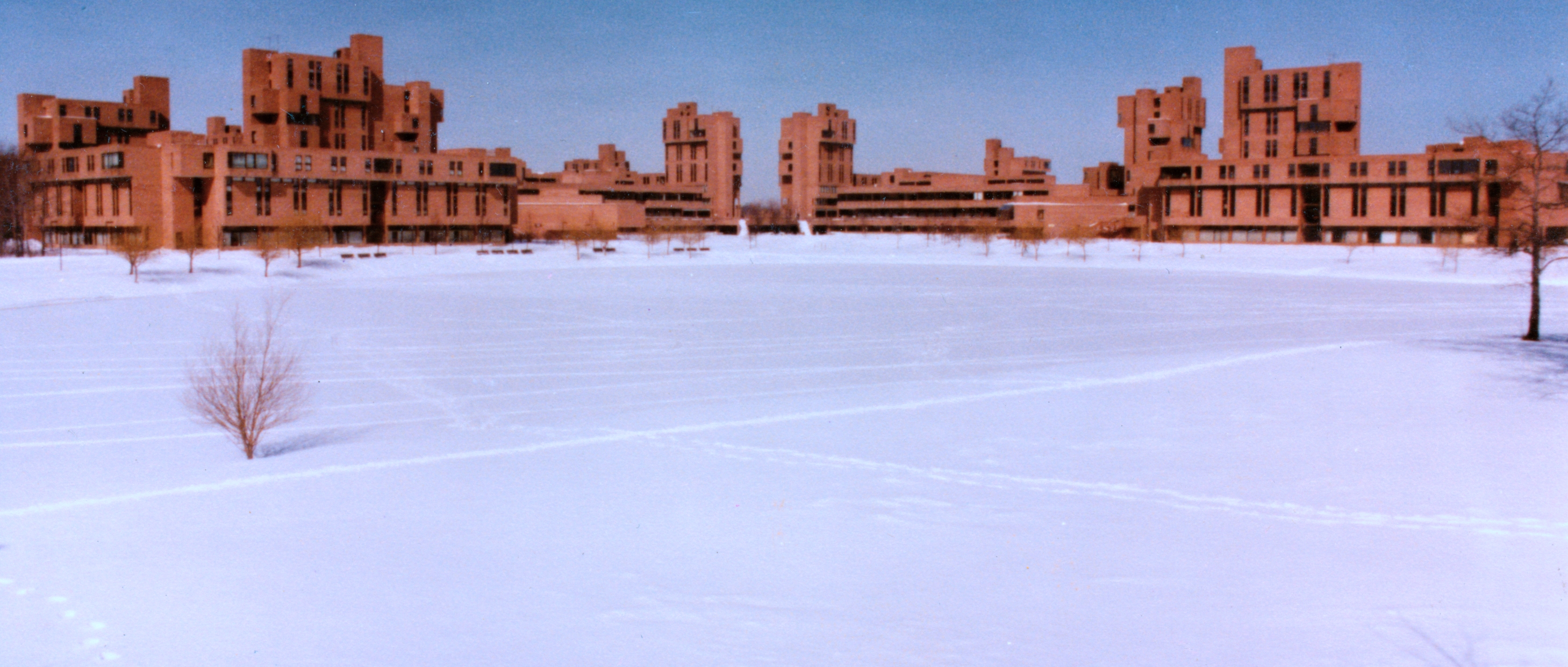
Image of Ellicott ComplexImage of UB North campus aerial viewImage of Ellicott Complex in winter
CLICK ON THE ABOVE CAMPUS IMAGES FOR AN ENLARGED VIEW


Online Syllabus Covering Basic Course Requirements, Homework and Test Schedule, etc.

SECTION A: ANNOUNCEMENTS


ANNOUNCEMENT 1 (Posted 1/21/26)

Dear All:

Welcome, welcome to this Spring 2026, AAS 280 course.

To begin with, please note that this a hybrid (online/in-class) course, meaning we will meet in class only on some days, while on other days we will not meet; instead you will do online classwork remotely (outside class). Our first class meeting will be on Thursday, February 5.

Below is (a) a summary of the basic course requirements from the syllabus; (b) homework assignments and test schedule; (c) a very important note about emails; and so on.
Scroll through this entire page to the very end below to see all the different sections.
The material on this class home page is a copy of the PDF format of the syllabus, which will be available shortly (via a link on this page below).

Please note that by registering in this course, it is understood that you have agreed to abide by all requirements indicated on this class home page (plus all university regulations applicable to all students).

Sincerely,
Instructor.
PS> Most communications about this course as it progresses will be via emails to you and/or via announcements on this page (or in class).


SECTION B: Basic Course Information


I. How this Course will be Taught
  1. First, you must have access to a reliable internet and a computer--if you do not have one please use the student computers on campus. Important note about web browsers: If you have any difficulty accessing online materials in this course, especially of you are an Apple device user, then please use either Chrome, or better still, Firefox as your web browser.
  2. This a hybrid (online/in-class) course, meaning we will meet in class only on some days, while on other days we will not meet; instead you will do online classwork remotely (outside class). Note: On those days that the class does meet, attendance will be mandatory (plus you will be asked to put away all your electronic devices during class). The UB Registrar's Office defines a hybrid course thusly: "A hybrid course incorporates both in-person and remote academic participation. The remote option may be offered synchronously or asynchronously. Students will complete academic activities both in person and remotely as scheduled by the instructor." (Note: F1 students can also take a hybrid course.)
  3. There are no required textbooks. Instead, homework materials will be available online 24/7 to give you flexibility in how you manage your time. NOTE: For copyright reasons they will be available only via this class home page and NOT via UBLearns (see homework schedule below). Homework assignments will consist of readings AND/OR films/documentaries. <-- Read this paragraph again.
  4. The term "homework" refers to everything you are assigned to do in this class via announcements on this class home page, and/or via emails to you, and/or via UBLearns.


II. About Emails

  1. To foster professionalism, when you send me e-mails, they must be in a professional format; otherwise, you may not get a response. Example of professional format: Begin with “Dear Instructor”;… and end with “Sincerely”, …. plus, your name as it appears in school records.
  2. Emails must be sent only via UB mail and NOT via UBLearns.
  3. The subject heading of your email must always include these two items: the course number, and what your email is about in a few words.
  4. Emails will usually be read and answered on the days this course is scheduled. Again, all e-mails must be sent via regular UB e-mail (and not UBLearns).
  5. Please do not send emails with questions that have already been answered. If you do, you will be asked to go back and read the relevant announcement / instruction that answers your question.
  6. It is really important that when you write about some clarification you need regarding an announcement, an instruction, etc. that you quote the exact sentence or paragraph that you are writing about. (Quoting does NOT mean taking a picture.)

III. Course Requirements/Grading Policy

  1. Tests/quizzes altogether will be worth 60% of your final course grade.
  2. There will be a final exam (worth 20%) during exam week.
  3. There will be a two-part test-based term paper project, it will be worth 20% of your final course grade.
  4. Letter grade equivalents of percentage points: A =97-100   A- =93-96    B+ =90-92  B =85-89   B- =80-84    C+ =73-79    C =66-72    C- =60-65    D+ =55-59   D =51-54   F =0-50
  5. Most communications about the course as it progresses will be via course announcements on this page and/or via emails (or in class). You must read your emails from the instructor regularly AND save them in an email folder you must create in your email account. IMPORTANT: See also note above about emails format.
  6. You must know how to navigate the internet, including accessing Brightspace (UBLearns). You must take notes on the homework material, but your notes must be very, very brief (about two or three words per page or video scene, as you go through the material--taking detailed notes means you are not digesting the material). You will need these notes for tests, since tests will be open notebook (the keyword here is notebook).
  7. You are NOT permitted to use AI (artificial intelligence, such as ChatGPT) to fulfill any of the requirements for this course--including homework, tests, term paper, etc.
  8. If you have any difficulty accessing online materials in this course, especially of you are an Apple device user, then please use either Chrome, or better still, Firefox as your web browser.
  9. If you claim that you cannot see a link for an item (or some other essential information), send me a clear picture of your ENTIRE computer screen, edge to edge (meaning EVERYTHING visible to you on your screen must be included in the picture), as an email attachment. Reminder: IF, in the extremely rare instance, there is a missing link (or some other information) it will affect the entire class, not just you. (The internet does not discriminate against specific individuals, whoever they may be.)
  10. If you have a disability, reasonable accommodations for equal access to this course should be requested through Accessibility Resources in Capen Hall (see section on General Course Administrative Policies below).
  11. University regulations stipulate that any modification of course requirements for one student must be made available to other students too (unless it is a disability-related modification).
  12. IMPORTANT: If you are still registered for this course beyond the final add/drop deadline for course registration, then it will be assumed that you have thoroughly read, understood, and agreed to abide by all course requirements for this class. In fact, you may be asked to submit a disclaimer that you read the syllabus diligently and will fully abide with all the course requirements, as well as all mandatory university requirements.
    
IV. What this Course is About
  1. The purpose of this course is to provide an introductory overview of Africa’s past and present since the continent's involuntary contact with Western Europe in the late fifteenth century. The course has three main parts to it: the precolonial era, the colonial era, and the postcolonial era. Specifically, the course aims to (1) introduce you to the scope and consequences of the Atlantic slave trade in Africa--including, very briefly, an overview of the Atlantic African diaspora (precolonial era); (2) examine the dynamics of European colonialism in Africa--including African resistance to it (colonial era); and (3) offer perspectives on Africa's political and economic circumstances today (postcolonial era). Prior knowledge of Africa is not required; therefore, the course will begin in the first few lessons with a contemporary visual overview of the select regions of the continent via films and documentaries.
  2. In addition, you will also be introduced to material on succeeding in a research university, as well as ways to enhance your executive function skills and critical thinking skills that can help with meeting your educational objectives.
  3. Homework, on average, will require about one "concentrated" hour per day of your time (which equals to about 7-8 concentrated hours per week--this is similar to doing 3 hours of class time, plus about 4 hours of homework for an in-person class). Note: A concentrated hour is an hour that requires full concentration from you--that means no distractions of any kind!
  4. The learning outcomes for this course are available via the PDF format of the syllabus (see link below).

V. General Course Administrative Policies

 1. Student Responsibility: The University’s “Student Responsibility Statement” specifies as follows: “By accepting responsibility for their education, students enhance the development of their academic, social and career goals. As a condition of enrollment, students are responsible for reviewing, understanding, and abiding by the university’s regulations, procedures, requirements and deadlines as described in official publications, including the university’s undergraduate catalog, UB websites, and official university email communications. In addition, all students are required to positively affirm their knowledge of UB’s Student Conduct Rules, University Standards and Administrative Regulations (available here) prior to their inaugural semester at UB. Asserting a lack of knowledge of university regulations will not be accepted as a basis for an exception to these regulations.” <-- Folks, read this last sentence again. Here are links for the UB Student Code of Conduct and the Undergraduate Catalog. In other words, this course strictly abides by university policies on:

(a) academic honesty;
(b) discrimination;
(c) sexual harassment;
(d) academic freedom (see below); and
(e) classroom etiquette (available via the
Undergraduate Catalog).

2. Disability: If you have a disability, reasonable accommodations for equal access to this course should be requested through Accessibility Resources in Capen Hall.

VI. Academic Freedom

People, because of the kinds of topics we will be covering in this course (relating to race, gender, class, democracy, the rule of law, etc., etc.) which may sometimes provoke controversy among some of you, it is really important that you understand the university’s policy on academic freedom as it relates to faculty. This policy reads in part: The University supports the principle of academic freedom as a concept intrinsic to the achievement of its institutional goals. This principle implies a trust in the integrity and responsibility of the members of the academic community. Samuel P. Capen, former Chancellor of the University of Buffalo, who is remembered for the tradition of academic freedom he implemented during his leadership of the University, said in 1935:

“Acceptance by an institution of the principles of academic freedom implies that teachers in that institution are free to investigate any subject, no matter how much it may be hedged about by taboos; that they are free to make known the results of their investigation and their reflection by word of mouth or in writing, before their classes or elsewhere; that they are free as citizens to take part in any public controversy outside the institution; that no repressive measures, direct or indirect, will be applied to them no matter how unpopular they may become through opposing powerful interests or jostling established prejudices, and no matter how mistaken they may appear to be in the eyes of members and friends of the institution; that their continuance in office will be in all instances governed by the prevailing rules of tenure and that their academic advancement will be dependent on their scientific competence and will be in no way affected by the popularity or unpopularity of their opinions or utterances….”


SECTION C: Homework Assignments and Tests 


I. About the Homework
  1. Homework assignments will comprise readings AND/OR films/documentaries. The term "homework" refers to everything you are assigned to do in this class via announcements on this class home page and/or via emails to you, and/or via UBLearns, and/or announcements in class.
  2. How to access the homework assignment for each week: follow the "click path" indicated for each assignment below.
  3. Homework should be done without any distractions of any kind, that is no multitasking (e.g., web browsing, emails, computer games, gossiping, etc., etc.) Multitasking is a huge impediment to learning--please read this article on multitasking.
  4. What should you pay close attention to, as you go through these assignments? Everything! (Repeat, everything!) Why everything? First, because completing the homework in its entirety with absolute diligence is in itself a learning objective in this course, given that most (if not all) of you have never in your entire lives ever encountered the subject matter these assignments cover during a course of study in school. Second, because the homework load in this course is not that heavy. 
  5. To create your own subtitles, in case you need them, for material that does not have subtitles follow the instructions here.
  6. You should take notes, but your notes should be very brief--repeat, very brief--just a few key words per scene / theme / concept / idea. You will need these notes for tests to help your remember material, since tests are open book.

II. About the Tests
  1. Majority of test questions will be aimed at determining if you did do the homework at all AND that you did the homework diligently.
  2. Tests will be open notebook (the key word here is notebook).
  3. Tests will take place in class.
  4. If you do the homework with diligence, you should find the questions a breeze. What does with diligence mean? To do the homework really well, that is with absolutely no distractions of any kind--in the same way that I too have to do the homework in order to generate the questions for the tests you will be taking.
  5. Attempting to take a test without studying for it constitutes a form of cheating.
  6. Please note: if you fail to take a test on the scheduled date and time without a documented excuse acceptable to me, you may not be allowed to do a make-up.

III. Homework Assignments and Tests Schedule


INTRODUCTION: The Geography and Culture of Africa


---------------------------------------------------------------------------------------------------------------------------------------------------------------------------------------------
TEST No. 1  (will cover homework for weeks 1 and 2, below) on Thursday, February 5, in class.
---------------------------------------------------------------------------------------------------------------------------------------------------------------------------------------------

Week 1 (beginning Monday, January 19)

Week 2
(beginning Monday, January 26)


---------------------------------------------------------------------------------------------------------------------------------------------------------------------------------------------
TEST No. 2  (will cover homework for weeks 3 and 4, below) on Thursday, February 19, in class.
---------------------------------------------------------------------------------------------------------------------------------------------------------------------------------------------


PART I: The Precolonial Era


Week 3
(beginning Monday, February 2)
Week 4 (beginning Monday, February 9


---------------------------------------------------------------------------------------------------------------------------------------------------------------------------------------------
TEST No. 3  (will cover homework for weeks 5 and 6, below) on
Thursday, March 5, in class.
---------------------------------------------------------------------------------------------------------------------------------------------------------------------------------------------


Week 5
(beginning Monday, February 16)
Week 6 (beginning Monday, February 23)
Topic: As above. 


The Rest of the Homework/Test Schedules will be available shortly.


SECTION D: Test Scores
Your updated test scores (with extra points) will be available via a link in this section. 


SECTION E: Syllabus (PDF Format)
The pdf format of this syllabus will be available via link in this section. 


SECTION F: Learning Outcomes
  See the pdf format of the syllabus (link above).


  SECTION G: Images of Slides on Definitions, Concepts, Theories 

Please study all the Slide Images available via this PDF document.